Student Profiles
Patrick Carmack, 37, and
Jeffrey Spence, 39, Statistics
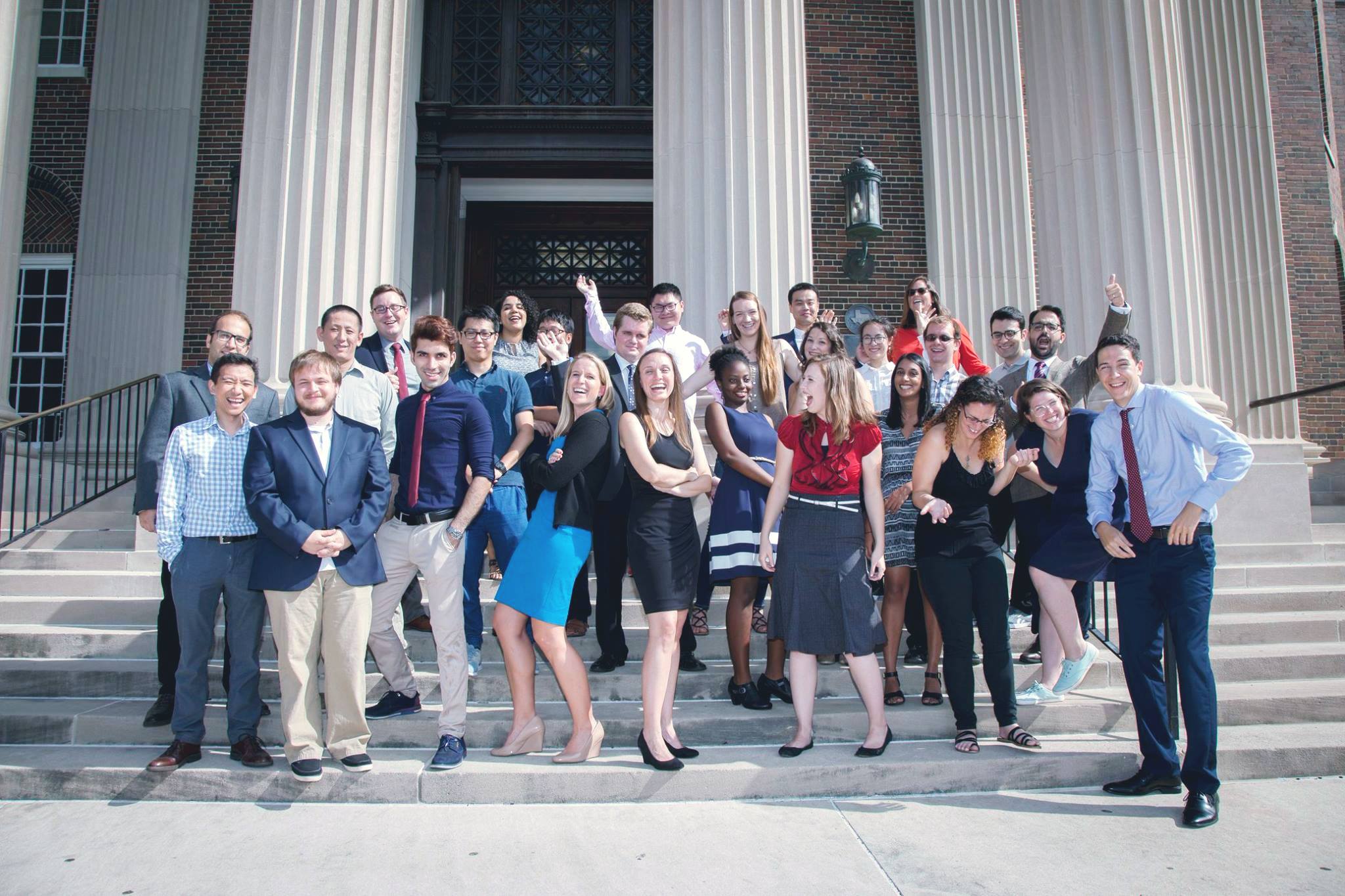
Colleagues Patrick Carmack and Jeffrey Spence have parlayed research begun when both were working on Ph.D.s in statistics at Southern Methodist University into associate professorships in Clinical Sciences at UT Southwestern Medical Center, where they are continuing their research.
The two did not know each other well when Dr. Robert Haley, an epidemiologist at UT Southwestern, came to SMU's statistics department looking for someone to help him analyze data on individuals with Gulf War syndrome.
Carmack and Spence were drafted for the project, and it proved to be a fortuitous association for all three men.
Haley had two sets of SPECT (single photon emission computed tomography) neuroimaging data on 34 individuals, one set a baseline measurement of cerebral blood flow and the other set a measurement taken after the individuals had been given a short-acting drug that temporarily simulates the effect the toxins believed to be associated with Gulf War syndrome.
Before Carmack and Spence could apply standard statistical analysis tools to the data, they had to develop some preprocessing techniques. "If you have a whole 3-D image, pixels in three dimensions, you'd like to be able to pull out specific anatomical parts, called regions of interest," says Carmack. The two developed a better mapping technique so they could reliably extract those images. They also developed a method to improve relative measurements called white-matter scaling.
They've published papers on the preprocessing methods they developed and, yes, they've been able to draw some conclusions about Gulf War syndrome. Brain matter in individuals in the "Gulf War syndrome II" group did appear to have changes consistent with exposure to neurotoxins.
"It was kind of understood that what we had done was really groundbreaking, and (UT Southwestern) wanted us to continue doing research on brain imaging," says Carmack.
Spence and Carmack may not have known each other well when they began their neuroimaging project, but after years of sitting side by side they have discovered common ground. "We have the same sick sense of humor," says Spence.


SMU Research Magazine