Departments

Conversation With The Dean

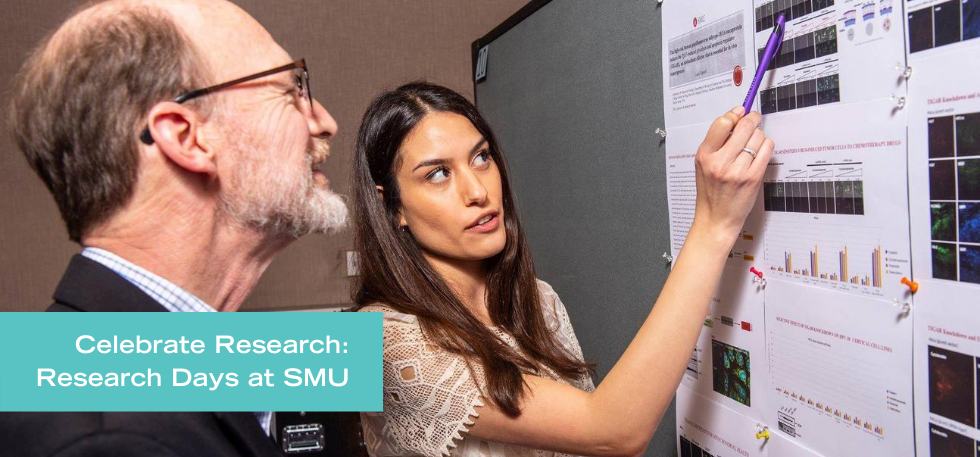
Celebrating And Investing In Research At SMU


page 1 of 3    [ 1 ] [ 2 ] [ 3 ]    Next Page  


James E. Quick, associate vice president for research and dean of graduate studies, who joined SMU in 2007, has long participated in the enterprise of creating new knowledge.

A scientist with the U.S. Geological Survey for 26 years, he brings a global view and experience in creating and leading large and significant research projects: environmental studies to guide Everglades restoration; an earthquake risk assessment of Cyprus; geologic mapping for the Kingdom of Morocco; and monitoring the 169 active volcanoes in the United States.

He is experienced in attracting grants and funds from federal and state agencies, the United Nations and various international sources. Quick, who holds a Ph.D. in geology from California Institute of Technology, has visited five continents to conduct research on the deep magmatic plumbing systems beneath volcanoes.

He currently advises the Commonwealth of the Northern Mariana Islands on development of renewable energy. Quick spent the past year becoming familiar with SMU’s broad range of research activities as well as its funding needs to support those activities. He shares his goals and thoughts with SMU Research.


Q. How does SMU convince alumni and donors that research pertains to them?

A. The evidence is all around us. Research has been fundamental to creating the world we live in now. Absent achievements in science and engineering, we would be living much as we did in medieval Europe.We all benefit from extraordinary advances that have contributed directly to our quality and length of life: automobiles, airplanes, penicillin and modern medicine, electricity, computers, plastics and air conditioning.

As a nation, we have been immeasurably fortunate that the United States has led the world in research since World War II, creating so many of the innovations that constitute the foundation of our prosperity and security. Silicon Valley is a clear example of the contribution research innovation can make to national and local economies. Now focus on the Dallas-Fort Worth area, and imagine a future in which thriving research at SMU contributes directly to solutions of local problems, such as issues in urban planning, rapid transit and water availability, and to national problems such as energy sustainability and immigration. As a top-flight research university, SMU will be contributing to the local economy through partnerships with the private sector and tech transfer of its research discoveries to stimulate development of new industries.

SMU will be competing with the highest ranked universities for the best undergraduate and graduate students, many of whom will settle in North Texas. In short, imagine a communityuniversity partnership that sparks the next Silicon Valley right here in the Metroplex.

Q.What are your goals for Research and Graduate Studies at SMU?


A. My overarching goal is to set SMU squarely on a path that leads to increasing stature as a research university. Looking to the future, I envision SMU as a source of influential scholarship that addresses the major problems facing our society, with a prestigious faculty holding numerous awards from leading professional societies and recognized by increasing memberships in the national academies. I envision a vigorous research enterprise that attracts the best young faculty and offers highly regarded Ph.D. programs that produce graduates whom the nation’s elite universities covet as faculty. I envision an SMU that celebrates and invests in research and graduate education as essential components of the top-tier university it has become.

Q. How does research support teaching?

A. Research informs a faculty member’s teaching, and faculty should constantly seek new knowledge so they can provide the most up-todate and accurate information to their students. Many fields, such as computer science and biology, are evolving so fast that a faculty member not engaged in research is teaching material that becomes progressively out of date.

Our research must tackle big problems and engage our students in their solution. No leading research university is without a vigorous graduate program, and graduate education is part of the overall educational experience that the modern American university is expected to provide. In addition to performing much of the research, graduate students directly contribute to the education of undergraduates as instructors, mentors and role models. As we grow research at SMU, I hope that we successfully reach out to undergraduates, capture their imaginations and draw them into excitement of discovery through direct participation in research.
page 1 of 3    [ 1 ] [ 2 ] [ 3 ]    Next Page  


Features

Home

In The Beginning

Bio Wizards

Points Of Light

Into The Future

Departments

Conversation With The Dean

Noteworthy & New

Faculty Profiles

Research & Relationships

Sponsored Research Awards

Contact Us

Issue Archive

Other Links

Research & Graduate Studies